


Cork Motorhome Hire: Live Inventory and Pricing
Planning a road trip that starts in Cork means balancing urban sightseeing, scenic drives, and overnight campground logistics within a few hours. This hub tracks live partner inventory — about 210 rigs in the current cache from €112–€149/night — plus depot pickup timing, campground length limits, and seasonal demand around the metro area.
Why Cork Is a Strong Motorhome Gateway
Motorhome hire in Cork typically ranges from €137 to €212 per day, with vehicles available through multiple travel partner depots across the city and surrounding region. During peak season, demand registers as High, meaning travellers should expect limited availability and premium rates—booking at least 31 days in advance significantly improves your chances of securing your preferred vehicle. With temperatures reaching a comfortable 25°C during summer months, Cork serves as an ideal base for exploring Ireland's southern coastline, from the historic English Market in the city centre to the dramatic coastal scenery that defines County Cork's 1,100-kilometre Wild Atlantic Way section.
The compact nature of Cork city makes it surprisingly accessible for motorhome travellers, though the surrounding countryside truly showcases why this region attracts campervan enthusiasts from across Europe. Multiple fleet providers maintain depots near Cork Airport and along the N40 ring road, providing convenient collection points whether you're flying in or arriving overland. The variety of available units spans compact two-berth campervans ideal for couples exploring coastal villages to larger four- and six-berth motorhomes suited for families planning extended touring holidays along Ireland's southern peninsula routes.
Pickup Depots, Traffic & First-Night Campgrounds
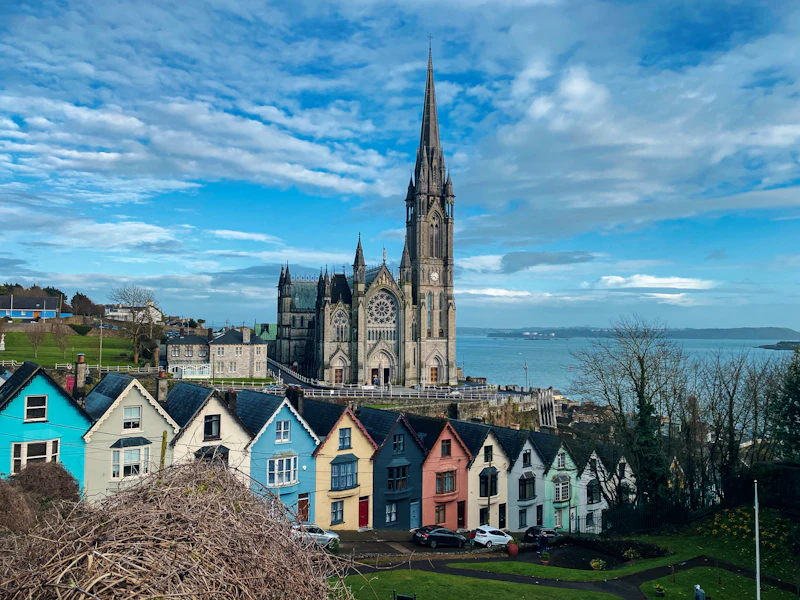
Cork's position on Ireland's south coast delivers exceptional access to some of the country's most celebrated landscapes, historic sites, and coastal communities. The city itself blends Georgian architecture with contemporary Irish culture, particularly evident around the English Market—a covered food market operating since 1788 that remains the heart of Cork's culinary scene. St. Fin Barre's Cathedral, located just 1.2 kilometres from the city centre, showcases French Gothic Revival architecture and serves as a stunning introduction to Cork's historical significance before you venture into the surrounding countryside.
Beyond the urban core, Blarney Castle sits just 8 kilometres northwest of Cork city, where the famous Blarney Stone attracts visitors willing to lean backwards over a sheer drop to kiss the stone and supposedly gain the "gift of the gab." The castle grounds span 60 acres of landscaped gardens and woodland walks, providing several hours of exploration. Further west, Kinsale (approximately 27 kilometres from Cork) represents one of Ireland's most picturesque harbour towns, renowned for its colourful buildings, gourmet restaurants, and maritime history. The drive from Cork to Kinsale follows coastal routes that reveal why this region attracts photographers and landscape enthusiasts throughout the year.
| Aspect | Motorhome Hire | Hotel Stay |
|---|---|---|
| 3-Day Cost (2 people) | €381–€582 total | €450–€900 (accommodation only) |
| Flexibility | Overnight anywhere with facilities; change plans spontaneously | Fixed location; requires booking changes with penalties |
| Meal Costs | Self-catering saves €40–€60 daily per person | Restaurants for most meals |
| Experience | Wake up at coastal clifftops, forests, or harbour towns | Standard room views |
| Best For | Exploring multiple regions; families; outdoor enthusiasts | City-focused stays; business travel |
Seasonal Demand and Booking Windows Near Cork
Most successful Cork motorhome itineraries focus on either the western peninsulas (Beara, Sheep's Head, and Mizen Head) or the eastern coastal route toward Youghal and County Waterford. The western route proves particularly rewarding, with the Beara Peninsula offering dramatically quieter roads than the more famous Ring of Kerry to the north. From Cork city, the drive to Bantry takes approximately 90 minutes via the N71, passing through Bandon and several charming villages where narrow streets require careful navigation in larger motorhomes. The coastal scenery intensifies as you approach Glengarriff, where subtropical vegetation thrives in the mild maritime climate.
For overnight stops, Garrettstown House Holiday Park near Kinsale provides excellent facilities including electric hook-ups, fresh water, and waste disposal points, all within walking distance of Garrettstown Beach—one of West Cork's finest sandy stretches. The park operates year-round and accepts advance bookings, though summer weekends fill quickly. Further west, Eagle Point Camping in Bantry overlooks Bantry Bay with direct beach access and views toward Whiddy Island. Both facilities accommodate motorhomes up to 8 metres comfortably, though manoeuvring within the parks requires attention to tight corners and overhanging trees.
Traffic around Cork city centre presents the primary navigation challenge, particularly during weekday morning (8:00–9:30) and evening (17:00–18:30) rush periods when the N40 southern ring road experiences significant congestion. A common mistake among first-time visitors involves attempting to park larger motorhomes near the English Market or St. Patrick's Street—these central areas feature restricted access and minimal suitable parking. Instead, use the Park and Ride facility at Black Ash on the south side or Mahon Point Shopping Centre, both offering better motorhome access and frequent bus connections into the city centre.
Scenic Loops From Cork
Understanding Ireland's unique driving conditions significantly improves your Cork motorhome experience, particularly regarding road widths and rural navigation. Many of West Cork's most scenic routes follow narrow country roads designated as "regional roads" (R-numbered routes) where stone walls line both sides of the carriageway, leaving minimal clearance for passing vehicles. Roads like the R572 around Mizen Head showcase spectacular coastal views but require confidence reversing to designated passing points when meeting oncoming traffic. Wing mirrors often prove wider than drivers anticipate—experienced travellers recommend practicing in spacious car parks before tackling narrow rural routes.
Vehicle specification matters considerably in Ireland's varied terrain. Depots typically offer manual transmission as standard, with automatic gearboxes commanding premium rates due to limited availability. Manual transmissions provide better control on steep coastal inclines, particularly around the Sheep's Head Peninsula where gradients reach 15% on some sections. Engine size also impacts your experience—smaller 2.0-litre diesel engines struggle with fully loaded four-berth motorhomes on extended uphill sections, while 2.3-litre or larger engines maintain highway speeds more comfortably when touring with passengers and luggage.
Insurance coverage deserves careful consideration before departing from your collection depot. Standard policies from travel partner operators typically include comprehensive coverage with excess amounts ranging from €1,000 to €1,500. Excess reduction options lower your liability to €250–€500 for an additional €15–€25 daily. Given Ireland's narrow roads and tight village streets, many experienced motorhome travellers consider this worthwhile protection. Verify whether your policy covers damage to the motorhome roof—low-hanging branches and stone wall tops account for numerous insurance claims in rural Cork, particularly along wooded sections near Gougane Barra Forest Park.
Fuel planning requires attention in West Cork, where petrol stations become sparse along coastal routes. The stretch from Schull to Durrus covers approximately 30 kilometres without fuel services, while the Beara Peninsula's southern coast offers limited refuelling options once you pass Castletownbere. Most rental motorhomes achieve 8–11 litres per 100 kilometres (approximately 25–35 miles per gallon), meaning a typical 80-litre tank provides 700–1,000 kilometres range. Fill up in larger towns like Clonakilty, Skibbereen, or Bantry before venturing onto peninsula routes. Diesel remains approximately €0.10–€0.15 cheaper per litre at supermarket-affiliated stations compared to independent rural outlets.
Campgrounds and Overnight Stops
Cork's camping infrastructure caters well to motorhome travellers, with facilities ranging from full-service holiday parks to basic overnight stops at community sports grounds. Understanding the distinction between different facility types helps match your requirements to available options. "Holiday parks" provide comprehensive amenities including electrical hook-ups (typically 16-amp European standard), heated shower blocks, laundry facilities, and often on-site restaurants or shops. "Camping grounds" offer more basic services—fresh water, waste disposal, and toilet facilities without electrical connections. Several coastal locations also permit informal overnight parking in designated areas, though these rarely include services beyond basic waste bins.
Blarney Caravan and Camping Park, positioned 8 kilometres from Cork city centre near the famous castle, serves as an excellent first or last night location when collecting or returning rental vehicles. The park accommodates motorhomes up to 9 metres, provides 16-amp electrical hook-ups, and maintains modern shower facilities open year-round. Its location beside the R617 means straightforward access without navigating Cork's complicated one-way city centre system. The park fills quickly during July and August, particularly during Cork's Midsummer Festival and the Guinness Cork Jazz Festival in late October—advance booking through their website proves essential during these periods.
For coastal positioning, Ballylickey House Camping near Bantry offers memorable views across Bantry Bay toward the Caha Mountains. This smaller facility (approximately 30 pitches) provides electrical connections, hot showers, and a peaceful rural atmosphere 1.5 kilometres from the N71 main road. The grounds include mature trees and relatively level pitches suitable for motorhomes up to 8 metres, though the access lane narrows in places requiring careful navigation. Nearby Bantry town (3 kilometres) provides supermarkets, restaurants, and the impressive Bantry House and Gardens overlooking the bay. The campground operates from March through October, with July and August requiring advance reservations.
The Beara Peninsula presents more challenging accommodation options due to its remote nature and limited commercial campgrounds. Gap View Camping in Adrigole provides basic facilities in a dramatic mountain setting where the Healy Pass road climbs toward the Cork-Kerry border. This family-run site offers level hard-standing pitches with electrical hook-ups, though shower facilities remain modest compared to larger holiday parks. Its position makes it ideal for exploring both the Beara coastal circuit and the spectacular Healy Pass—one of Ireland's most scenic mountain roads climbing to 334 metres with hairpin bends and panoramic views. Note that the Healy Pass prohibits vehicles over 7 metres in length, requiring longer motorhomes to circuit the peninsula via the lower coastal road.
East of Cork city, Youghal Holiday Park provides beach-adjacent camping where the town's long sandy strand stretches for several kilometres along the Celtic Sea coast. This larger facility (100+ pitches) accommodates motorhomes of all sizes with electrical hook-ups, modern amenities, and direct beach access via a short woodland path. Youghal itself represents one of Ireland's oldest medieval towns, with intact town walls, St. Mary's Collegiate Church (dating to 1220), and a heritage trail exploring its connections to Sir Walter Raleigh who served as mayor in 1588–1589. The campground operates year-round, though services reduce during winter months when demand drops significantly.
Cork's unique network of community-operated motorhome parking areas deserves mention, particularly for budget-conscious travellers. Several coastal villages including Union Hall, Baltimore, and Castletownbere maintain designated overnight parking zones near their harbours or sports facilities. These locations typically charge €10–€15 per night through honesty boxes or attendants during summer months. Facilities remain basic—often just a chemical toilet disposal point and fresh water tap—but locations prove exceptional for harbour sunrises and immediate access to coastal walking trails. Union Hall's motorhome parking overlooks Glandore Harbour, while Baltimore offers stunning views toward Sherkin Island and Cape Clear Island, with ferry services to both islands departing from the adjacent pier.
Wild camping (parking overnight outside designated facilities) exists in a legal grey area in Ireland. While not explicitly prohibited on public roads, most motorhome travellers avoid this practice near towns or on private land without permission. The Leave No Trace principles apply absolutely—if you must stop overnight in a layby or scenic pull-off, ensure you leave no waste, don't extend awnings or furniture, and depart early morning. Many farmers and landowners object to motorhome parking on or near their property, particularly after previous visitors have left rubbish or waste. Using designated facilities supports local communities and ensures you're contributing to the tourism infrastructure that maintains Ireland's campgrounds and services.
Most renters pick up near the airport or city fringe, then head toward national parks, coastlines, or mountain loops. Scenic routes often have tight curves — confirm your rental length before committing to a narrow coastal or canyon road.
Urban overnight street parking for large rigs in Cork is restricted in many districts — treat the city as a launch point, not a campground. Book your first night at a full-hookup park before sightseeing downtown.
Shoulder seasons often balance weather and availability better than peak holiday weeks. Use the comparison widgets below to see fleet depots and peer-to-peer inventory on partner checkout — rates change daily.
- ⚠Check Cork municipal code for Motorhome overnight parking rules
- ⚠Generator quiet hours typically 10pm–7am at campgrounds
- ⚠Respect state park campervan length limits (usually 35ft max)
- 💡Cork is a popular campervan destination with year-round rental availability
- 💡Book campgrounds 6+ weeks ahead during peak holidays
Cork campervan hire Prices — Quick Reference
| Vehicle type | Low Season | Peak Season | Best For | |
|---|---|---|---|---|
| 🚐 Campervan | €75–€104 | €104–€134 | 2–3 | Couples, solo travel |
| 🏕️ Standard Motorhome | €127–€164 | €164–€224 | 4–6 | Families — most popular |
| ⭐ Luxury Motorhome | €209–€268 | €268–€358 | 6–8 | Large groups, luxury |
Compare partner depot and owner listings before leaving Cork — pickup windows and mileage caps vary by operator. Peak weekends and holidays fill inventory in Cork — book 3+ weeks ahead for the best rate.


